Crash-style games have rapidly become one of the most dynamic and accessible formats in online gaming. The concept is simple: short rounds, a multiplier that rises in real time, and a critical decision at just the right moment. Chicken vs Zombies follows this formula while adding a playful horror aesthetic, seasonal Halloween-themed graphics, and a risk-focused gameplay approach that keeps players engaged.
This guide explains how the game works, its key mechanics, important parameters (RTP, bet sizes, volatility, multipliers), common mistakes to avoid, and responsible strategies for playing—especially on mobile. The tone is neutral and informative, aimed at an international audience, without promising winnings.
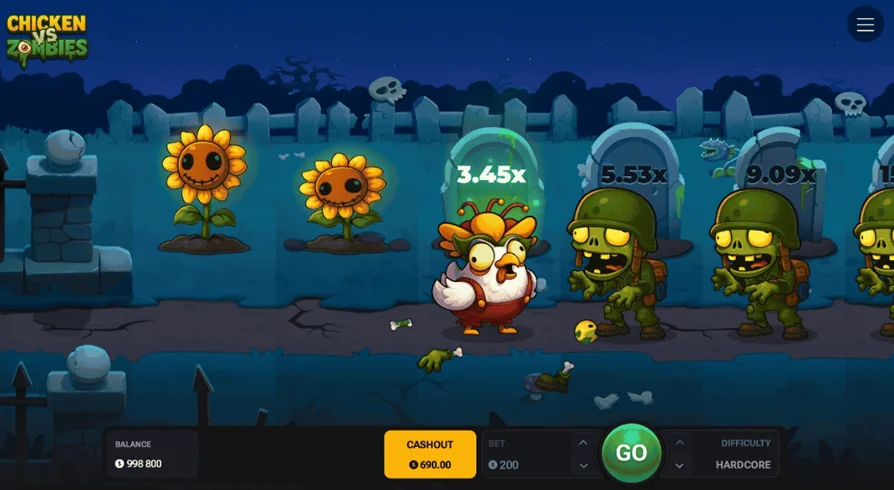
Chicken vs. Zombies is a fast-paced crash-slot hybrid where players must cash out before the chicken gets caught by zombies. The game combines arcade tension, instant decisions, and accessible stakes, offering simple onboarding with strategic depth, especially with demo mode and real-money play options.
Key Features
| Feature | Value / Description |
|---|---|
| RTP | 95.5% |
| Stake range | 0.01 to 200 per round |
| Max single-round win | Up to 20,000 |
| Difficulty levels | Easy, Medium, Hard, Hardcore |
| Target cashout | 1.3x to 5.0x depending on difficulty |
| Demo mode | Allows practicing timing without real money |
| Mobile-friendly | Optimized interface and buttons for iOS & Android |
| Recommended strategies | Micro-win, ladder, time-boxing, loss brake |
| Bonuses | Favor small bonuses with light wagering |
Key Takeaways
- Start with demo mode to master cashouts before playing for real money.
- Keep consistent bets and modest targets to protect your bankroll.
- Difficulty levels affect pace and risk: progress gradually.
- Choose bonuses for utility, not flashy percentages.
- Mobile play requires a stable environment and good ergonomics.
Understanding the Chicken vs Zombies Concept
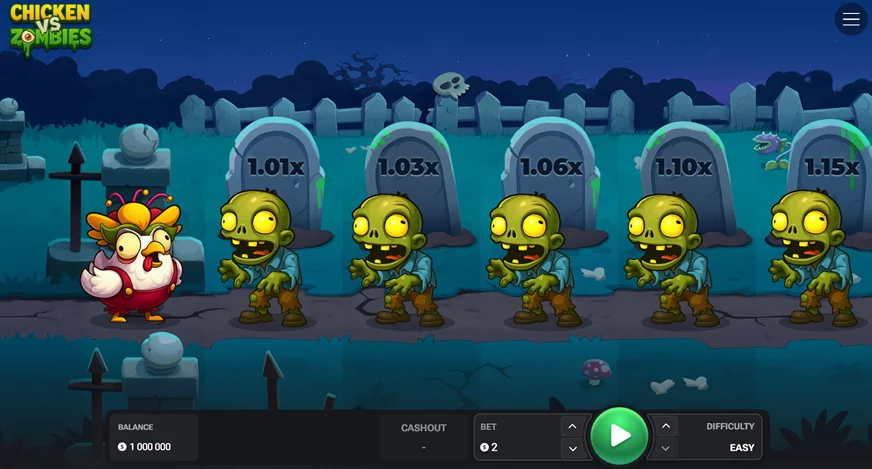
Chicken vs Zombies is a fast-paced crash game built around short rounds. Each round follows a simple structure:
- Select a bet
- Watch the multiplier increase over time
- Cash out before the round ends (the “crash”)
- Collect your winnings based on the multiplier if cashed out in time
- Lose your bet if you wait too long
The challenge is not in complex rules but in timing and discipline. While the game is easy to learn, aiming for higher multipliers or playing intense sessions quickly raises the difficulty.
How Chicken vs Zombies Works
Step-by-Step Gameplay
A typical round unfolds as follows:
- Choose a mode (demo or real money, depending on the platform)
- Pick a bet size (from very low to high, allowing for risk-free testing)
- Start the round
- Watch the multiplier climb in real time
- Cash out manually or using automated options on certain platforms
- Round ends
The tension arises from constant trade-offs: cashing out early reduces risk but limits potential, while waiting for higher multipliers increases both the possible reward and the risk of losing the bet.
Simple Mechanics, Strategic Depth
Although the rules seem basic, strategic elements emerge:
- Recognize your own reactions under pressure
- Set realistic multiplier targets aligned with your bankroll
- Manage session pace (short rounds, breaks, switching modes)
- Accept that losing streaks happen, even with careful play
Key Game Parameters You Should Know
RTP Explained
RTP (Return to Player) for Chicken vs Zombies is 95.5%. This number represents a theoretical long-term return, not a guarantee for a single session. It mainly helps compare games.
- RTP does not predict your short-term results
- Short sessions can see high variance
- A “good” RTP does not remove risk—it represents a statistical average
Maximum Multiplier & Maximum Win
- Maximum multiplier: very high
- Maximum win: capped
These figures influence player psychology. The high multiplier tempts players, while the capped win reminds that some platforms limit the maximum possible payout.
Practical tip: Focus on consistency rather than chasing the theoretical maximum. Small bets + realistic targets + emotional control yield better long-term experience.
Minimum & Maximum Bets
Low minimum bets allow risk-free practice. High maximum bets can encourage impulsive decisions.
Good practice: Start small, increase only when confident, and avoid chasing losses by suddenly raising stakes.
Volatility & Difficulty Levels
Chicken vs Zombies offers different difficulty profiles: from casual to intense. Difficulty affects:
- Perceived multiplier speed
- Frequency of sudden crashes
- Tolerance for losing streaks
The more intense the mode, the more comfortable you must be with consecutive losses without abandoning your plan.
Pros and Cons of the Crash Game Format
Advantages:
- Fast rounds ideal for short sessions
- Simple, understandable rules
- Feeling of control via the cash-out button
- Mobile-friendly design
- Demo mode allows safe practice for timing
Disadvantages:
- Emotional intensity from “cash out now or wait” decisions
- Risk of chasing higher multipliers after losses
- Frustration during near-miss rounds
- Discipline is hard to maintain in extended sessions
- RTP can be misunderstood, leading to unrealistic expectations
Common Mistakes to Avoid
- Chasing losses – Increasing bets after a loss or targeting higher multipliers is a high-risk trap.
- Playing without goals – No multiplier target or session limit often leads to impulsive play.
- Excessively long sessions – Fatigue undermines rational decisions.
- Rushing from demo to real money – Demo mode helps practice, but real money introduces pressure; transition gradually.
Recommended Play Approaches
Demo Mode for Learning
Ideal for:
- Understanding the multiplier’s rhythm
- Testing cash-out strategies
- Observing your own impulsive reactions
Real Money with Caution
- Small bets
- Moderate multiplier targets
- Short sessions
- Regular breaks
- Strict loss limits
Intense Mode for Adrenaline
- Increases stress and challenges
- Losing streaks hit harder
- Discipline is more important than strategy
Practical Tips for Enjoyment Without Losing Control
- Keep sessions short: Quick rounds reduce impulsive mistakes.
- Alternate objectives consistently: Switch between low-risk and moderate-risk targets, but don’t change plans after losses.
- Use demo mode for real training: Track goals, note mistakes, and observe your timing.
- Implement a cooldown rule: Pause if frustrated, stop after impulsive decisions, reduce bets when tempted to overreach.
Focus on mastering control, not chasing profits.
Bonuses, Bankroll & Mobile Considerations
Bonuses: Read Terms Carefully
Bonuses can extend playtime but often include restrictions:
- Wagering requirements
- Eligible games
- Withdrawal caps
- Crash game-specific rules
If conditions are unclear, it’s safer to skip the bonus.
Bankroll Management
- Divide your budget into small blocks
- Predefine loss limits
- Avoid exceeding limits, even during a “winning streak”
Mobile Play
Chicken vs Zombies is mobile-optimized. Smooth performance is critical due to timing-based gameplay.
Best practices:
- Use stable connections
- Close heavy apps
- Keep interface clear
- Avoid playing while fatigued
Legal and Security Considerations
Availability of crash games and online casinos varies internationally. Always:
- Choose transparent platforms
- Check terms for games, withdrawals, and bonuses
- Secure your account (unique passwords, safety options)
- Use responsible gaming tools (deposit limits, session limits, self-exclusion)
FAQ
Is Chicken vs Zombies luck or strategy?
It’s a luck-based game with decision elements. Timing creates an illusion of control, but outcomes are random.
What does RTP 95.5% mean?
A theoretical long-term return; useful for comparison but not predictive for short sessions.
Can I play for free?
Yes, demo mode lets you practice without financial risk.
Does the Halloween edition change odds?
No, it’s a visual theme. The gameplay and probability remain unchanged.
Which difficulty should beginners choose?
Start with an accessible mode to learn timing, variance, and session discipline.
Are crash games riskier than slots?
They can feel more “fast-paced” due to repeated immediate decisions. Impulsivity is the main risk.
How to avoid losing control on mobile?
Short sessions, pre-set limits, breaks, and avoiding play when tired or emotional.
Are bonuses recommended for crash games?
Only if conditions are clear and compatible; otherwise, better to play without bonuses.
How to transition from demo to real money?
Gradually: small bets, moderate targets, short sessions, and stop if emotions interfere.
Conclusion
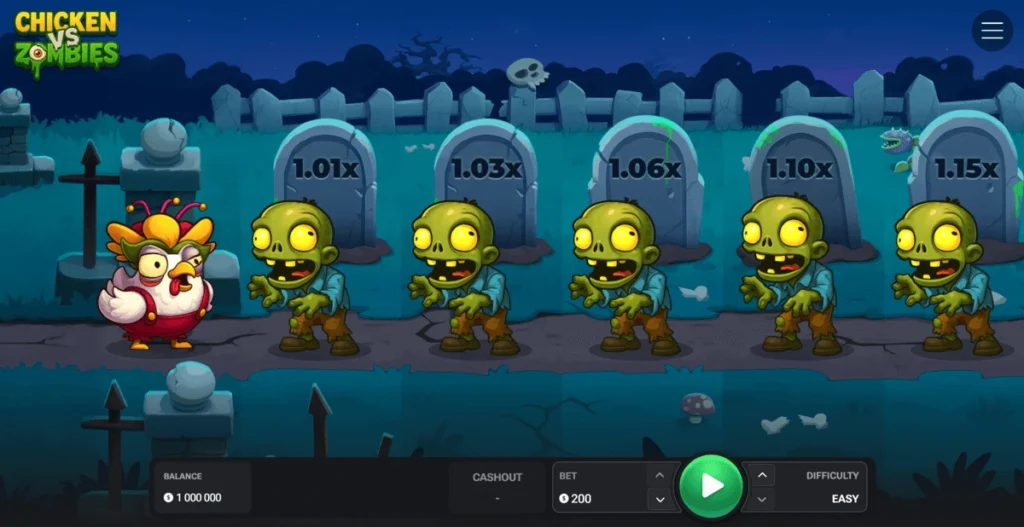
Chicken vs Zombies showcases the appeal of modern crash games: simple gameplay, fast rounds, instant tension, and immersive themes. Success depends on discipline rather than chasing wins.
The safest strategy: practice in demo mode, play short sessions, set clear limits, and treat the game as entertainment. Following these principles ensures maximum enjoyment while maintaining control, whether on desktop or mobile.