
After years of managing portfolio websites, high-traffic blogs, SEO projects, and conversion-focused platforms, I’ve had the chance to test numerous web hosting providers. Some out of curiosity, others out of necessity, and a few after technical frustrations.
This article is not marketing fluff. It’s a real-world experience report, focused on actual performance, stability, ease of use, and value for money. And to be upfront: the host that consistently stood out for me is Hostinger.

What I Really Expect From a Web Host Today
Before naming providers, it’s essential to define the core criteria. A quality web host should be evaluated based on daily use, not marketing pages.
For me, the essentials include:
- Real speed (low TTFB, stable loading times)
- Consistent stability, even during traffic spikes
- Simple, intuitive interface
- Efficient support, not just theoretical assistance
- Easy scalability (from shared hosting → VPS → cloud hosting)
- Transparent value for money, without hidden costs
These are the metrics I used to compare different platforms.
Observations From Testing Multiple Hosts
Legacy Hosting Providers
Older hosts inspire confidence because of their history, but in practice:
- Interfaces can feel outdated or heavy
- Performance is decent but rarely exceptional
- Pricing increases quickly once you move beyond the basic plan
- Support can be slow or generic
They are suitable for established businesses but often lack the agility modern website creators need.
Marketing-Focused Hosts
Sleek websites and attractive promises, but:
- Strong initial performance followed by gradual slowdowns
- Key features often locked behind upsells
- Support quality can vary over time
- Less suited for SEO-driven or long-term business projects
These hosts are good for getting started but quickly reveal limitations as your website grows.
Why Hostinger Became My Primary Choice
After extensive testing, migrations, and comparisons, Hostinger naturally earned its place in my stack.
Real-World Performance
Load times are consistently excellent, even without advanced optimization. Websites remain stable, even during traffic surges. For SEO and user experience, this is a major advantage.
Ease of Use
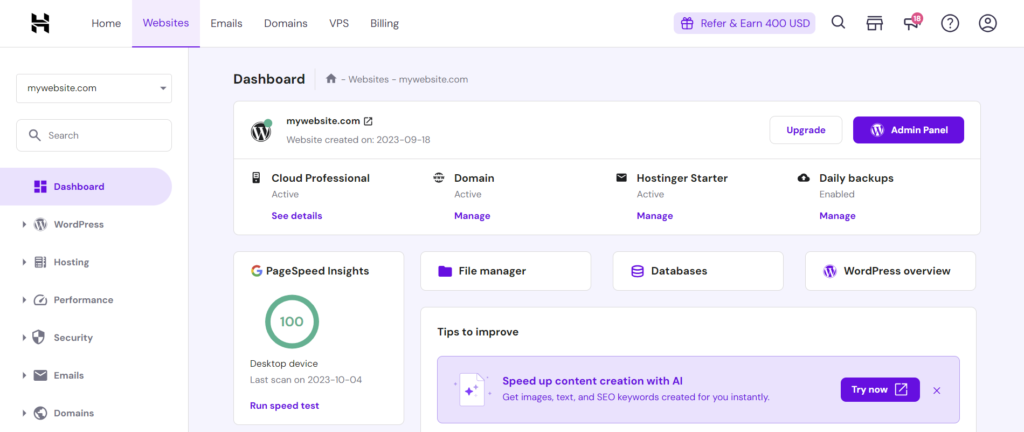
The management panel is clean, fluid, and modern. You can deploy a website, manage domains, emails, and security efficiently without wasting time.
Smart Scalability
Start small and easily upgrade to more powerful solutions without rebuilding everything. This is crucial when managing multiple projects.
Value for Money
With comparable features, Hostinger is often more competitive than other hosts, especially in the long term.
Suitable for Creators and Serious Projects
Whether it’s a content site, affiliate project, online store, or more technical platform, the hosting remains stable and reliable.
Key Takeaways (Honest Opinion)
No host is perfect.
- Entry-level plans are still shared hosting, so best for simple websites
- Some advanced features require basic technical knowledge
- Initial setup plays a key role in overall performance
Overall, the benefit-to-constraint ratio is highly favorable with Hostinger.
Comparison of the Best Web Hosting Providers (Hands-On Review)
| Host | Strengths | Limitations | Ideal For |
|---|---|---|---|
| Hostinger | Excellent speed, modern interface, affordable, scalable | Basic shared hosting on entry plans | Creators, SEO, online business |
| OVHcloud | Solid infrastructure, powerful servers | Complex interface, uneven support | Technical users |
| SiteGround | High-quality support, good performance | Higher long-term pricing | Professional sites, agencies |
| Bluehost | Easy setup, popular | Variable performance, expensive renewals | Beginners |
| PlanetHoster | Interesting hybrid hosting | Less flexible for rapid scaling | Institutional projects |
Final Verdict
After testing multiple hosts in diverse scenarios, Hostinger offers the best overall balance:
- Performance
- Ease of use
- Pricing
- Scalability for growing projects
It’s not just a “cheap hosting” option—it’s a modern, coherent, and effective solution designed for both current and future projects.
The most important takeaway:
Choose a web host that adapts to your project, not the other way around.